

distilled from scratch in dumfries & galloway
Copper pot distilled Scottish rum, crafted by hand on Dormont Estate
fermentation
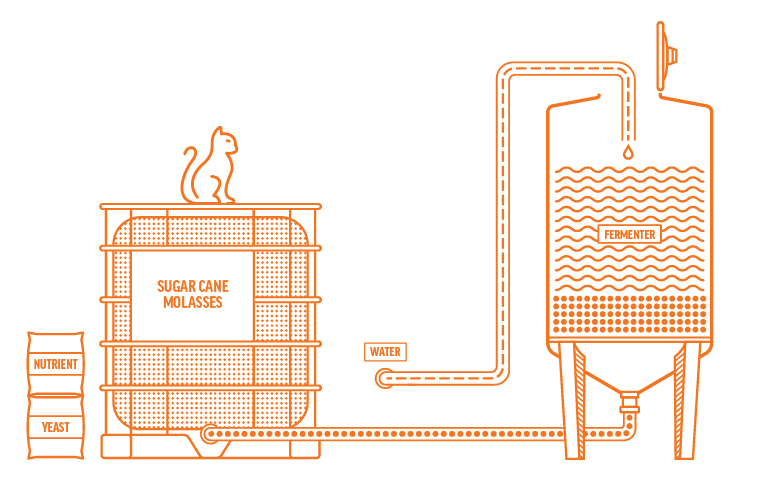
All of our rums start with molasses, water, and yeast

As a scratch rum distillery, we are making our own alcohol. We don’t buy it in pre-distilled from elsewhere to redistil or simply rebadge. Every drop is created by us from the raw ingredients of sugar cane molasses, yeast, and water.
These are combined in our 1500 litre fermentation tank, leaving the yeast to do its magic for around 4-7 days, leaving us with a ‘beer’ that is ready to ferment.
An active fermentation is one of the best smells in the distillery!

Fermentation Deep Dive
-
Sugar cane is the raw material that defines rum as a category. You cannot make rum from anything other than sugar cane, but you can make other spirits from sugar cane, like cachaça.
We use it in the form of molasses, a dense, thick, treacly byproduct of refining sugar cane. Our molasses is mostly from Algeria, but is a blend from all over the world.
-
Our normal fermentation recipe has evolved. We used to use only fresh water (from the tap, we don’t have our own supply) to mix with molasses to make a ‘wash’. This water had to be warmed up, which uses a lot of energy.
Now, a portion of the water is replaced with ‘dunder’, or backset as we know it, which is the waste liquid leftover from a distillation. It is hot and contains nutrients, and so ideal for helping to start a new batch.
As well as saving energy, it adds a little depth to the flavour of our rum.
-
We use a combination of RM and SR yeasts, selected for a clean rum profile, to turn the accessible sugar in our wash into alcohol. Essentially we’re making a kind of beer, but using sugar cane.
With help from added nutrient at the start and during the fermentation, it takes around 4 days to ferment to around 8.5% ABV, ready for distilling.
the distillation process
double pot distilled scottish rum
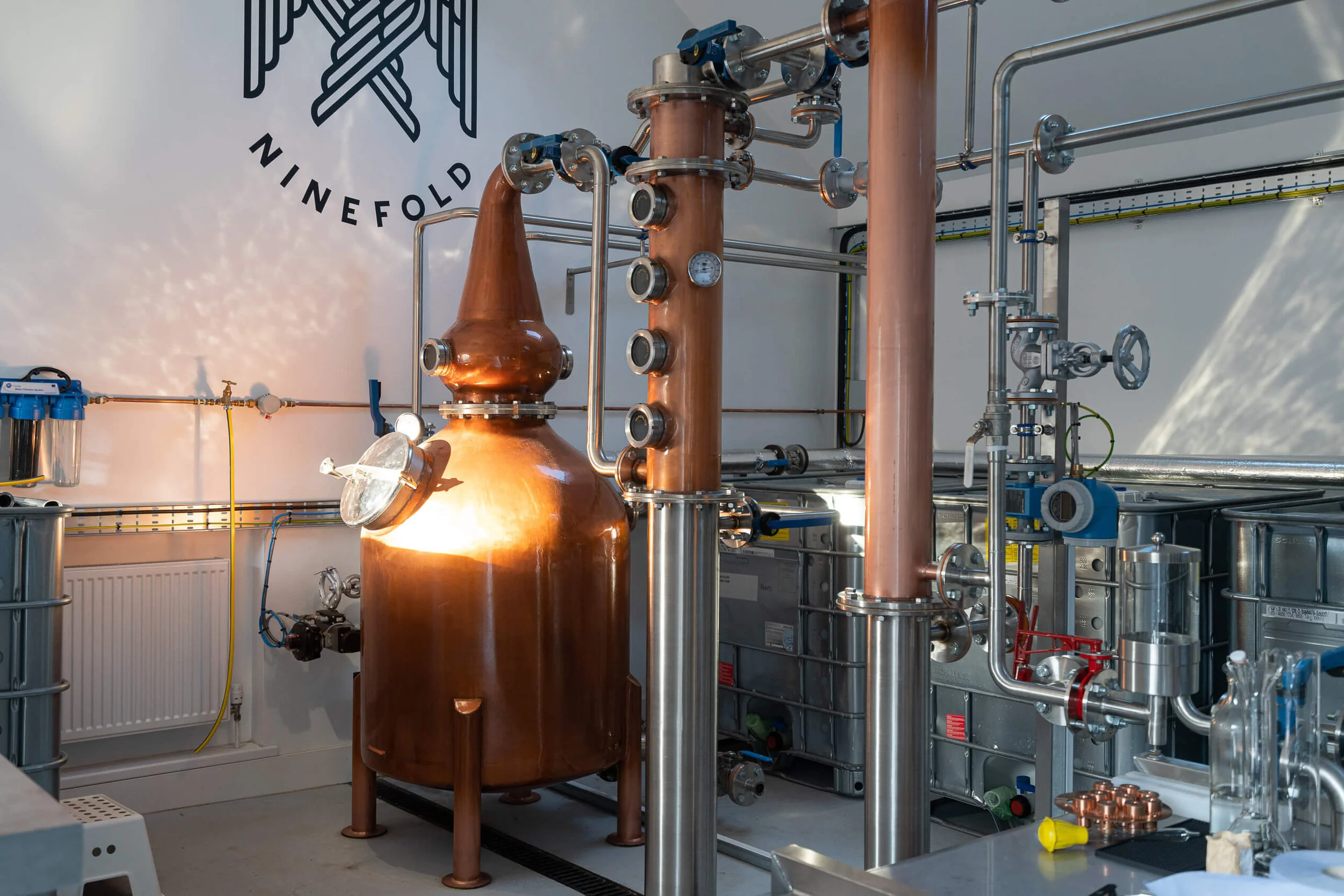
The first distillation, called the ‘stripping run’, simply boils out all of the alcohol from the wash to create a higher ABV product called ‘low wines’. Because we can’t get all 1500 litres of wash in our still, we have to do 500 litre batches at a time, usually taking two days of distilling.
The low wines collected from the 2-3 stripping runs are then returned to the still to be distilled into rum. On this ‘spirit run’ we use the hybrid element of the still: the rectifying column. This creates a very clean and high ABV rum, which comes off the still at around 90% ABV. We collect the best portion of this, the ‘hearts’ to become our rum. After distilling, we add water to the 90% spirit to reduce down to whatever proof we wish for our products!

distillation Deep Dive
-
The first of our double distillations, the wash run is where we are simply boiling out the alcohol in our fermented wash, to create a concentrated alcoholic interim product called ‘low wines’.
The wash run uses only the pot and the condenser, and the resulting low wines after 3.5 hours of distilling are at around 27-30% ABV, and about 1/3 of the starting volume in the pot.
Since our fermenter is 1500 litres, and our pot is 500 litres, we have to distil through 3 batches, typically spread over 2 days.
-
The second of our double distillations is the spirit run where, you guessed it, our final spirit is made.
For probably 90% of the spirit distillations that we do, we boil low wines from the wash run in the pot, which sends alcohol vapour to the column, before finally passing to the condenser.
The column is just four plates, but creates up to a 92% ABV spirit! This also results in a clean and fruity final rum.
The spirit run is where we make our ‘cuts’ between the dirty methanol and acetone-laden heads at the start of the distillation, our hearts cut of beautiful tasting rum, and the oily heavy tails at the end.
The hearts cut leaves us with around 120 litres of rum at 90% ABV.
The heads and the tails are redistilled into subsequent batches for improving both flavour and yield!
spicing and bottling
we bottle and spice unaged rums ourselves

Once our rum is made, the next step is to dilute to a bottling strength using filtered water. This usually takes another 6 days of slow diluting to retain the flavour and lovely mouthfeel of our rum.
For Pure Single Rum, we dilute to 46%, and for our two spiced rums we dilute to 40%.
Then comes the fun bit! We add natural extracts of spices along with cane sugar and some caramel colouring. Give it a good mix, leave it overnight, and we’re ready to bottle!
All of our bottling and labelling is done by hand at the distillery. We don’t outsource this very labour intensive final part of the process, so we’re in total control from start to finish of making and bottling our rums.
However, most of our rum that we make at the moment is destined to be laid down in casks for ageing. Make sure to keep scrolling to find out more.
cask ageing our scottish rum
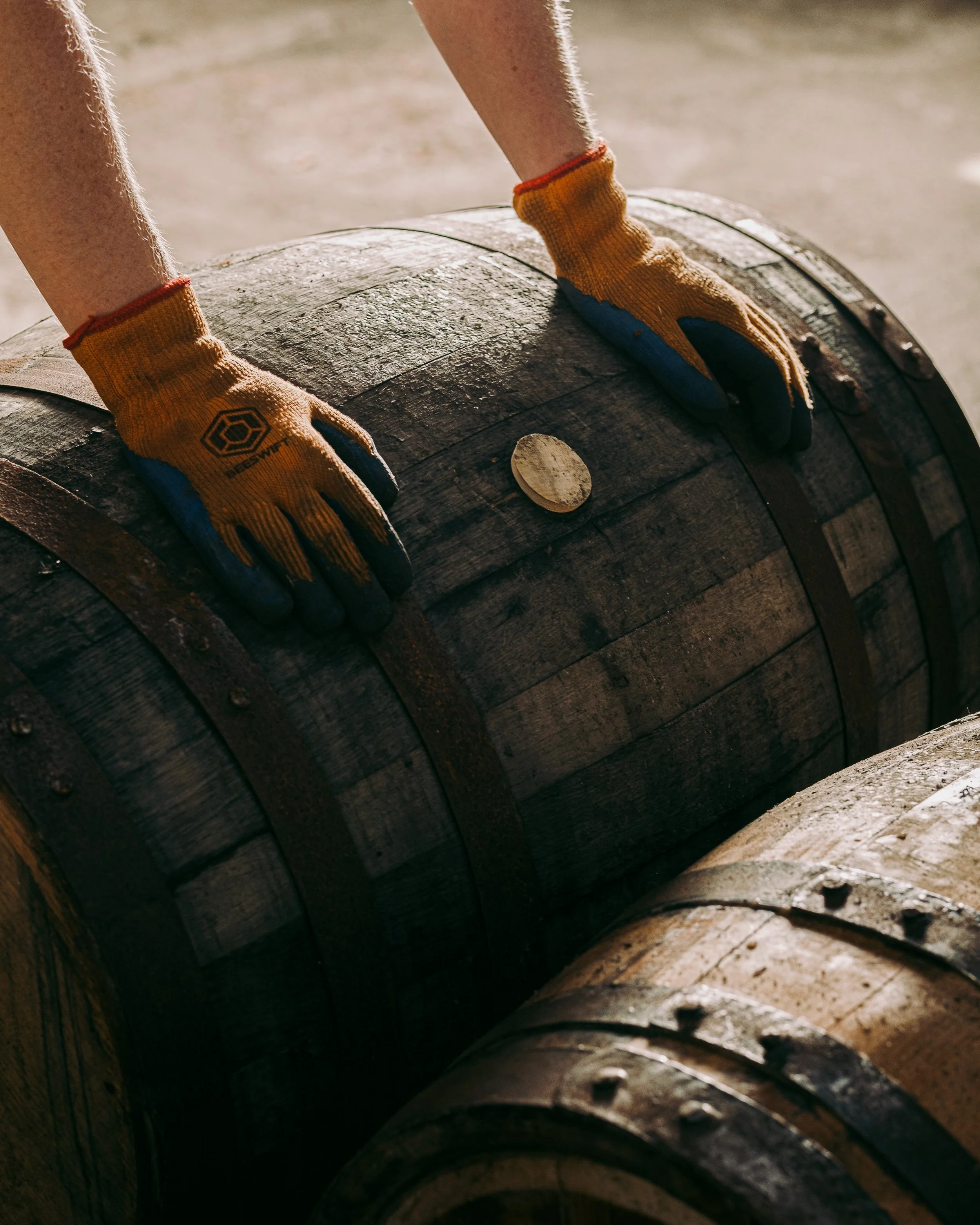
We mature our own rums on site, in a small warehouse right next to the distillery
our casks are our future
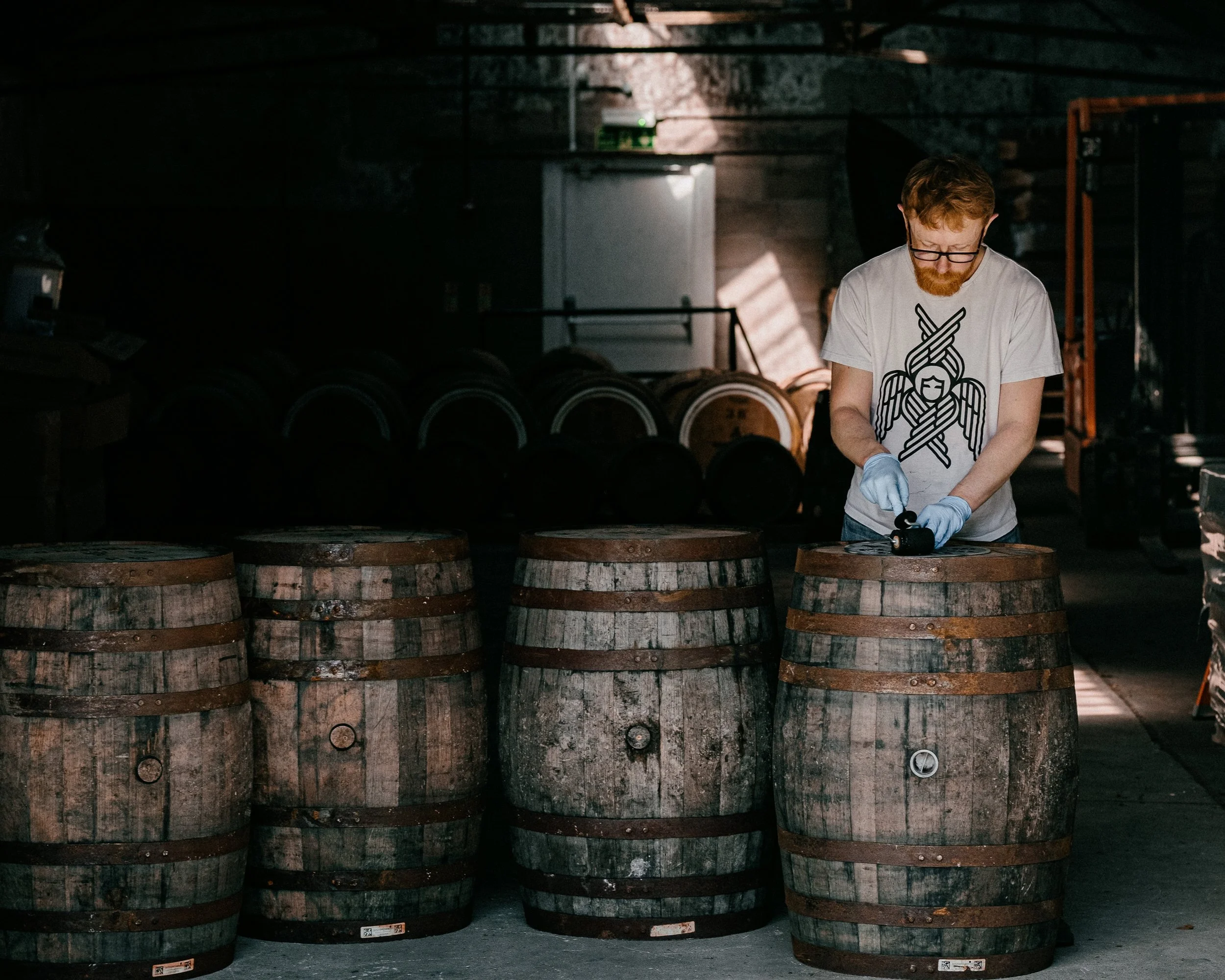
At Ninefold we spend a considerable amount of time and effort into filling casks for future aged releases. We’re proud to say that our aged products are the backbone of our reputation as a distillery, and the real showcase for our passion and skill.
Casking allows us some experimentation in how we make our rum, whether that’s changes to the fermentation materials or conditions, how we run the still, or what casks we end up filling.
In most cases, though, we are filling 200 litre standard barrels of American oak at 63.5% - either virgin unused casks, or ex-bourbon from a variety of distilleries. However about 1/3 of the stock we hold is ‘other’, which can mean ex-whisky, ex-red wine, and sherries.
But that also includes our stock of Scottish oak casks - barrels coopered especially for us, using our own wood from Dormont Estate.
Maturation times vary from 2-3 years for virgin wood, through to 10+ years for ex-bourbon and others. We only started filling barrels in 2019, so we don’t have very old stock yet, but we’re sure working on it!